Kumar Sangakkara reveals why ECB allowed Jofra Archer to skip Test match for IPL
Understanding the Collaborative Decision Behind Archer’s IPL Stay
The relationship between national cricket boards and the lucrative Indian Premier League (IPL) has often been a point of contention in modern cricket. As the 2026 season unfolded, the England and Wales Cricket Board (ECB) found itself navigating a delicate balance between player availability for international duties and the developmental benefits of franchise cricket. Amidst this backdrop, Jofra Archer emerged as a focal point of discussion, prompting the question: why was he permitted to prioritize his IPL stint over early Test match preparations?
While many prominent English players opted to skip the franchise circuit this year to focus exclusively on national team assignments, Archer’s decision to remain with the Rajasthan Royals invited scrutiny from several former England stars. However, following a clinical victory over the Mumbai Indians at the Wankhede Stadium, Rajasthan Royals head coach Kumar Sangakkara provided much-needed context. Sangakkara confirmed that the arrangement was not a unilateral move by the player, but rather a “collaborative decision” involving the ECB.
Workload Management as a Priority
Jofra Archer’s career has been punctuated by significant injury setbacks, a reality that has forced the ECB to adopt a cautious approach toward his return to peak performance. Protecting such a high-value talent is paramount, and the board has implemented a rigorous workload management program tailored specifically for the fast bowler. The goal is to ensure he remains in prime physical condition for upcoming high-stakes assignments, such as the Test series against New Zealand.
Sangakkara emphasized that the ECB’s flexibility was rooted in long-term vision. “I think it’s a collaborative decision from what I know. I don’t want to speak out of turn about things I don’t know with certainty, but I think it was a collaborative decision between the ECB and Jofra,” the head coach remarked.
The Technical Rationale Behind the Decision
The challenge for a fast bowler returning from injury is regaining the necessary endurance for the grueling demands of five-day cricket. Sangakkara pointed out the disparity between the short bursts of intensity in T20 cricket and the sustained effort required in Test matches. “Talking about his bowling goals, especially in a Test match, it’s very difficult to get your bowling goals up very soon when you are bowling only four overs in a game,” Sangakkara explained.
The Royals coach noted that by allowing Archer to continue his stint, the ECB recognized the specific bowling milestones the pacer needed to achieve in a competitive environment before transitioning back to the longer format. The board understood that once those specific performance targets were met, Archer would be better prepared for the rigors of Test cricket upon his return to England.
Archer’s Impact on the Field
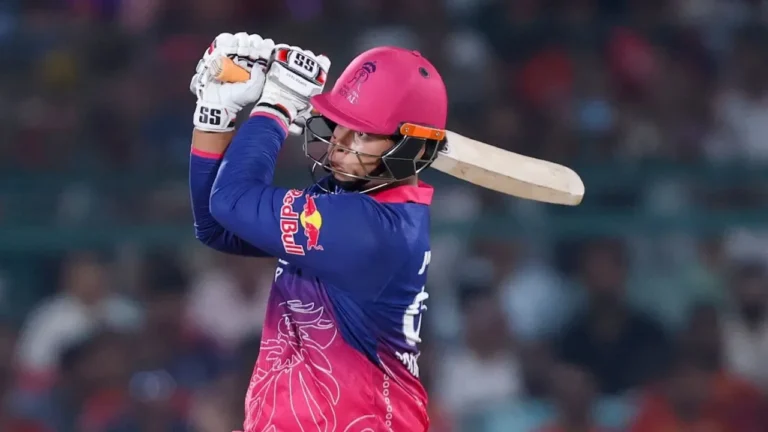
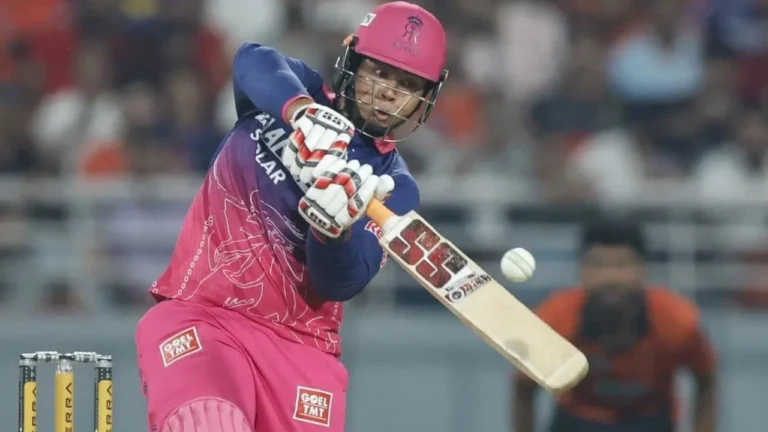
Jofra Archer’s performance during the clash against the Mumbai Indians served as a testament to the success of this managed approach. He was instrumental in the Royals’ dominance, delivering an all-round masterclass. With the bat, he contributed a blistering 32 runs off just 15 balls, and with the ball, he proved unplayable, claiming three crucial wickets while conceding only 17 runs in his four-over spell. His Player of the Match performance solidified his status as a key asset for both his franchise and his national side.
Ultimately, the narrative surrounding Archer is one of careful coordination. Both the Rajasthan Royals and the ECB share the objective of ensuring that the bowler’s comeback is sustainable. By maintaining an open dialogue, the stakeholders involved have ensured that Archer can continue to evolve as a bowler while fulfilling his professional obligations, with the ultimate aim of seeing him at his best in an England shirt once again.

Related Articles